
The meeting point between Trump and Putin is that both follow the strategy of the destructive chaos
Alaa Aldin Alkhatib
04/01/2019
Trump’s decision to withdraw from Syria—which even staunch Trump allies can’t stomach—makes it very difficult to believe that Trump has any kind of strategy. He always does what everyone, including his close advisers, would never expect. One week before Trump announced the withdrawal from Syria, Mr. Brett McGurk, special presidential envoy for the global coalition to defeat IS, told reporters at the State Department: “Nobody is saying that [IS fighters] are going to disappear. Nobody is that naive. So we want to stay on the ground and make sure that stability can be maintained in these areas.” Anyway, Trump has again changed his mind and said that he will slow down the withdrawal.
It looks like Trump has no strategy, but if we see strategy not as we used to when trying to understand American policies, then we can see Trump’s actual strategy: it is “Destructive Chaos.” And at this point, he meets with Putin, because Putin has the same strategy, though for totally different reasons. Maybe this is why these two leaders like and respect each other.
After the collapse of the Soviet Union, the US, leading the West, rushed to fill the vacuum. They initiated the new global economic system, the World Trade Organization, and free trade agreements. The US became the sole world leader since the 1990s, planning how to keep this position, watching the Chinese economic giant carefully, and keeping an eye open on the second military power, Russia. In other words, the main US strategy in the 21st century was established to maintain its superiority through the new global free-market system—which was mainly designed by Americans—and to serve this position with its military superiority.
Since Trump stepped into the White House, he began destroying what the US worked hard to achieve: withdrawing from international trade agreements, forcing American companies to come back home, launching trade wars, and fabricating thrilling shows around world hotspots: North Korea, Iran, Syria, and immigration. Recently, he shocked the whole world, including his fellow Republicans, by supporting Saudi Arabia’s Crown Prince MBS in the wake of the Jamal Khashoggi killing. A few months earlier, he stood aside when the Saudi government engaged in a major political conflict with Canada, he mistreated many leaders of Western alliances, and he supported Putin’s story at the expense of the FBI’s.
Ten years ago, after a long struggle with the West, Putin couldn’t establish a trusting, cooperative relationship with them. The West was very proud to force compromises on a “weak Russia”; therefore, Putin decided to use his strongest card: “Military Power.” He intervened in Ukraine, knowing that he couldn’t stabilize the region, but it was enough for him to put East Europeans on a hot tin roof and trouble the EU. A few years later, he intervened in Syria as well. This time, he is not only controlling the troubled southern gate of the EU, but he and his strategic ally Iran are also controlling the hot Middle East and Central Asia, standing close to the weaker side of China.
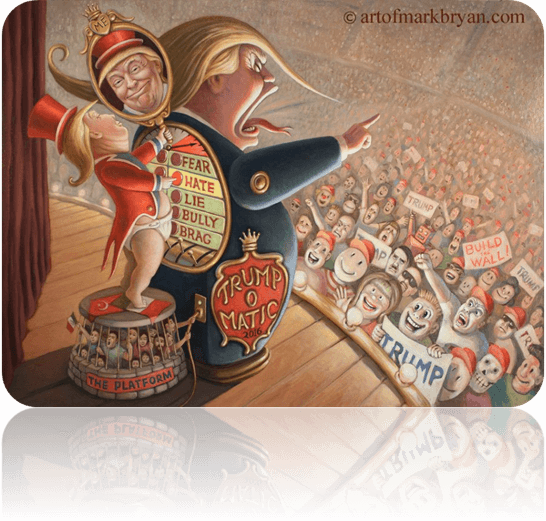
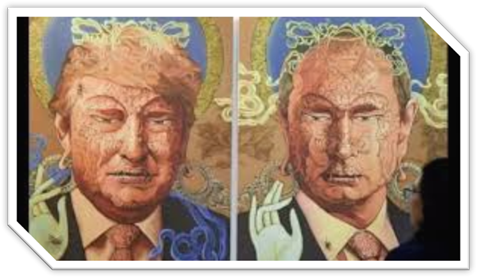
Trump and Putin, directly and indirectly, support the rise of the extreme right in Western Europe. Eastern Europe is almost entirely ruled by the extreme right, and Western Europe is falling quickly into its hands. Trump and Putin claim that they are fighting Islamic terror, but neither actually does. Indeed, neither fought Islamic terror. In addition, Trump and Putin are against anything related to the fight against climate change; both favor greater use of fossil fuels and natural resources.
Why are those two leaders running in this chaos?
Putin knows that Russia has no chance to compete in the global market. It has neither the capacity nor the capability to compete with the West, China, Japan, and South Korea in the markets of high tech, modern industry, services, and IT. The previous oil crisis proved just how fragile the Russian economy is. Putin can only compete in the military playground; Russia is still the second strongest military power after the US. Therefore, a world with more wars and conflicts means that the Russian emperor Putin can regain Soviet-era glory, provided he can keep those conflicts far from Russian borders and direct them toward Europe.

On the other hand, the US is not weak; it has been enjoying its greatest era since it was established centuries ago. Nevertheless, Trump never saw that glory and power. He always used to say, “Let’s make America great again.” When was America greater?
It seems that “greatness” for Trump is something different. Maybe because he is a president with limited experience and intelligence, and because he, like everyone else, was shocked when he found himself ruling the strongest country human history has ever known. He knew that he won because many people were angry, unsatisfied, and in a rush, so they listened to and believed his populist speech. He knew that his popularity depended on contradicting any typical policy people were used to. And here, we should admit that he shows his only intelligent side.
In addition, as a gambling businessman, he used to depend on his instinct and the jumpy market more than on this new, complicated 21st-century market model. Trump knows very well that to guarantee his presidency now and after 2020, he needs to change the US and the world into the model he knows best: “A Colosseum of Gladiators.” Then, the fanatic, keen audience will be loud enough to keep him as an emperor.
Trump and Putin didn’t cause the chaos in the 21st-century world, but both want to use it for their own glory. Therefore, both support conflicts and push fundamentalism. They are not conspiring in a way where they plan and execute together—they are not genius enough to do that—but they arrived at the right moment. The chaos in the international market, in international organizations, and among countries (including Europe) makes both of them the strongest two gamblers.
US policies since the 1950s knew how to use, and sometimes even create, conflicts, but they always kept the control buttons available. Trump doesn’t care about keeping control. He believes that the US is strong enough to keep the fire behind the oceans or behind his new Great Wall; he thinks he can build high walls and isolate the US from the earthquakes around the world. However, it is impossible for such a mentality to see that the earthquakes move underneath the ground, and that the US is right at their center.
Unfortunately, Europe—the second strongest economy—is falling apart under extreme right-wing parties and the failures of traditional politicians. China is still incapable of being the alternative. The media and the intellectual elite couldn’t keep up with the 21st-century speed because they still work as they used to for decades.
Trump, Putin, the Western extreme right, extreme Islamism, and fundamentalist nationalism were always around us. Policymakers since the 1990s refused to see them and continued their foolish game of struggle as they used to do for decades. Now, all those who were hiding are jumping up and taking over the world, leading humanity into catastrophic Destructive Chaos.
Vienna
04/01/2019


