
This article summarizes the statistical data contained in a study in Arabic, which can be read at this link.
the contents of a study in Arabic
Alaa Aldin Alkhatib
12/08/2017
download as PDF
Introduction
According to the United Nations High Commissioner for Refugees (UNHCR), up to the middle of 2016, 13.5 million Syrians, including 6 million children, are in an urgent needs of protection and humanitarian assistance; 6.5 million of them are internally displaced in Syria, more than 5 million Syrian refugees are in the neighboring countries and Egypt, 7.5 1 million children and adolescents are in need of educational support, 1.5 million are permanently disabled, and at least estimation 280,000 victims.
The European Commission’s statistics department ERUROSTAT reports that the accumulated number of the First Time Asylum Applicants (FTAA) from Syrians in Europe reached 946,855 between 2010 and 2016, of total 4,399,045 during the same period. But the refugees problem in Europe has very different approaches, far from the material health safety and education problems, it has been being used as a political and media card deep inside the political struggle inside and within the European countries; it wouldn’t be exaggeration if one said that: the refugees problem was one of the strongest tools used to shift the political power balance in Europe towards the fundamental and alt right, mainly because the majority of the refugees are from Muslim countries.
The second section observes the situation of refugees in Europe, since 2010, and analyses what is called “Refugees crisis” from many different views, to uncover the real problem. Most of the recent studies in Europe are waving between tow direction: one uses the refugee’s problem and the Islamophobia illusion to gain power and pushes Europe back to the fascist line. The second denies the problem and continues the traditional policies regardless of the global changes, therefore its shadow integration policy is slowly collapsing. this paper tries the focus on the missing area between the two streams.
1 Overview
The humanitarian situation of displaced people around the world is not as it was hoped to be in the 21st century.
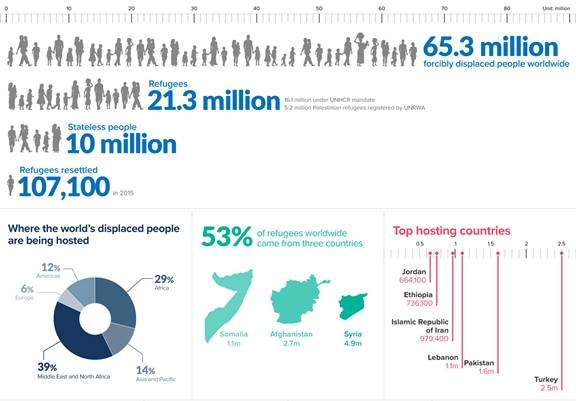
Figure 1 The displaced people around the world in 2015 (UNHCR)
In the fiftieth of the last century there were globally 800 refugees for every one million people, but in the year 2015, there were 2700 refugees for every one million of people.
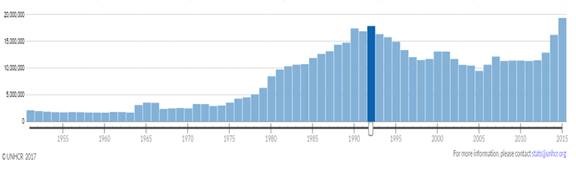
Figure 2 The refugees number in the world since 1950. (ref: UNHCR)
2 Syria in 2010
2.1 Population
The total population of Syria in 2010 was 20.75 million.
2.2 Economy
The GDP in 2010 was 60 billion US$ (PPS), 3000 US$ per capita.
The Syrian economy was relatively doing ok, but it has serious problem in the distribution of the wealth, and the high rate of corruption.
2.3 Military and Security Sector
The military personnel were in 2010 around 400 thousand, the security personnel estimations were between 100 and 200 thousand.
2.4 Political situation
Syria was under the govern of Hafez Al Assad since 1970 to 2000, then his son Bashar Al Assad. it was one of the strongest hardest dictatorship regimes in the last 4 decades.
2.5 Refugees in Syria
Syria used to receive refugees from all over the world since thousands of years. recently, in 2007 there were one and half million Iraqi refugees in Syria, dropped to one million in 2010, und to 41 thousand in 2016.
3 Syrian refugees
3.1 The most important reasons for the escalation of the Syrian refugee movement
· The rapid escalation of violence in Syria since 2011, by the Syrian regime, and by the Islamist militia, who fight, either with or against the regime.
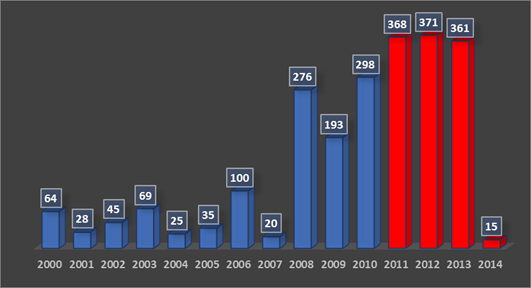
Figure 3 Weapons imported by the Syrian regime (ref: SIPRI 2016)
· Transforming the Free Syrian Army to Islamist militias, by using money and media; and changing the fight goals to religion sectarian war, after Iran send many thousands of Islamist Shiite fighters (Mujahidin), and the “sudden” rise of ISIS in Syria.
· The collapse of the Syrian economy in catastrophic way.
· The misinformation used by all the mass media form all parties, created a huge amount of illusions, and many people fled the country believing that they are coming back soon.
4 The Syrian Refugee Movement
UNHCR reported on 27/04/2017 that it has more than 5 million registered Syrian refugees in the neighboring countries and Egypt.
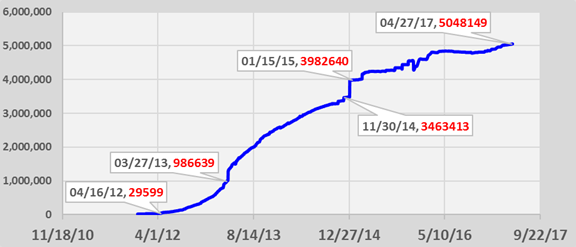
Figure 4 The Syrian refugees in the neighboring countries
The Syrian movement to Europe accelerated after 2015, when ISIS began wining more lands in Syrian and Iraq.
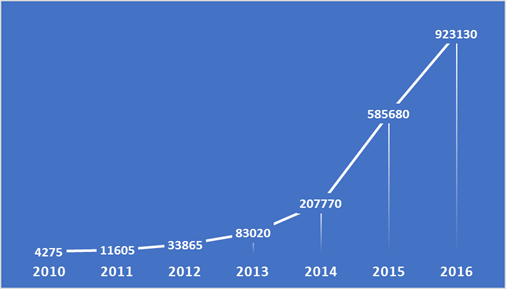
Figure 5 The total number of the Syrian asylum applicants in Europe (Eurostat)
5 Syrian refugees in the neighboring countries
5.1 Number and distribution of the Syrian refugees in the neighboring countries
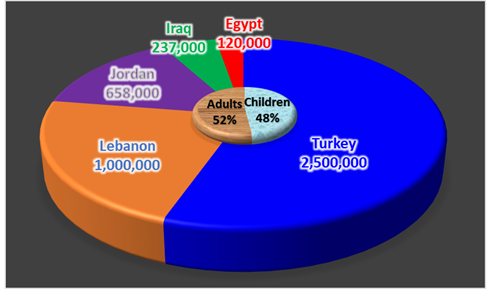
Figure 6 Number and distribution of the Syrian refugees in the neighboring countries
UNHCR estimated on the end of 2016 that there are 534,000 children out of school in the neighboring countries.
The situation of Syrian refugees in the neighboring countries vary a lot. they suffer the worst situation in Lebanon
5.1.1 Turkey
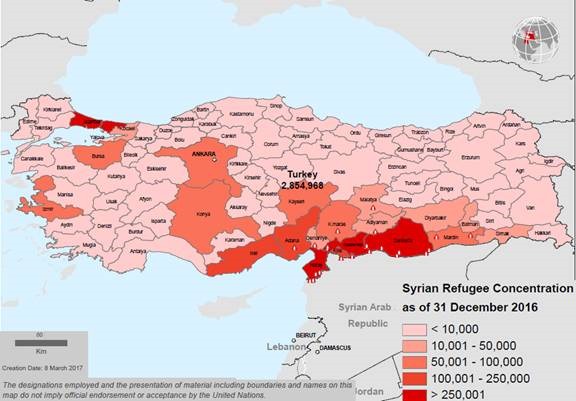
Figure 7 Syrian refugee concentration as of 31 of December 2016 in Turkey (UNHCR).
5.1.2 Lebanon
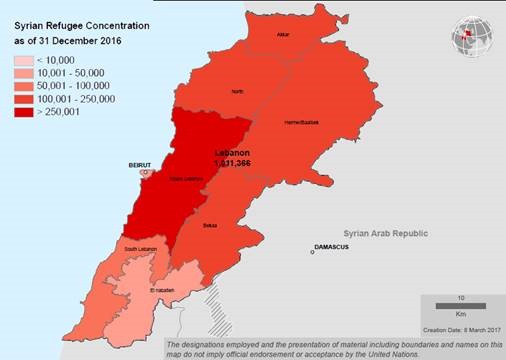
Figure 8 Syrian refugee concentration as of 31 of December 2016 in Lebanon (UNHCR).
5.1.3 Jordan
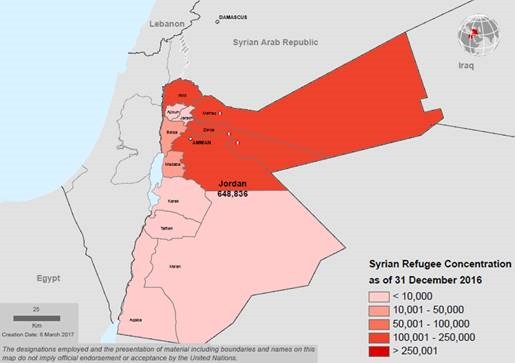
Figure 9 Syrian refugee concentration as of 31 of December 2016 in Jordan (UNHCR).
5.1.4 Iraq

Figure 10 Syrian refugee concentration as of 31 of December 2016 in Iraq (UNHCR).
5.1.5 Egypt
5.2 Donations and material assistance to Syrian refugees in the neighboring countries
5.2.1 Entities and donor countries
The UN Regional Refugee and Resilience Plan (3RP), and Humanitarian Response Plan (HRP) could afford more than 10 billion US $ between 2011 and the middle of 2017 for the 13 million displaced Syrian.
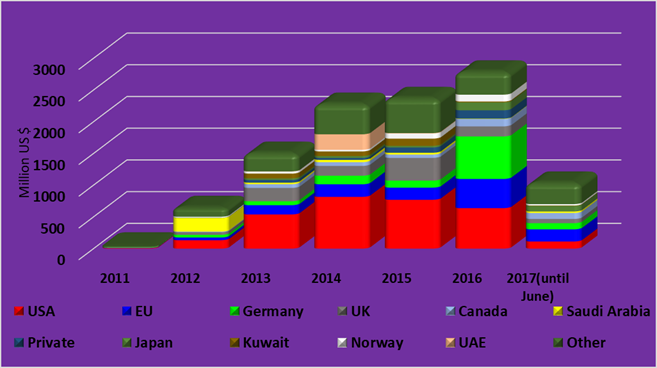
Figure 11 The main donors of the UN REGIONAL REFUGEE & RESILIENCE PLAN for Syria (UNHCR)
5.2.2 Recipients of humanitarian assistance
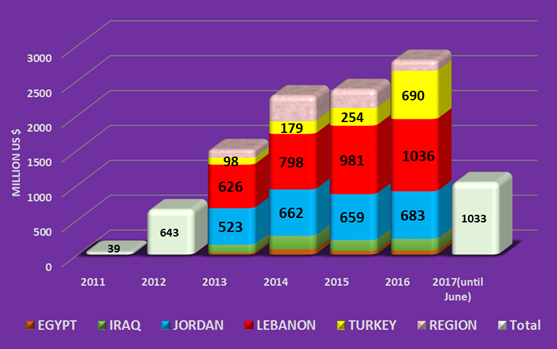
Figure 12 The recipients of the humanitarian aid (UNHCR).
5.3 Out of Statistics
The Syrian refugees are still under threat in Lebanon and Jordan because they are not recognized as refugees according the UN standards. and there is a real risk that they might be used in the political struggle inside Lebanon.
6 Conclusion
The Syrian refugees in Lebanon are facing a catastrophic situation, not only because of the gab of money, but because of the political use of their case inside Lebanon and outside, and because the Lebanese government refused to officially register more than 60% of the young Syrian refugees. The situation of Syrian refugees in Jordan is relatively better in Jordan but it still doesn’t meet the minimum level of human rights. The situation in Iraq (mainly in Kurdistan), Turkey and Egypt is better, and the difficulties can be easily solved.


