18/11/2013
Alaa Aldin Alkhatib
One historical distortion in media and history records is labeling the 1979 Iranian revolution simply as the “Khomeini Revolution.” While no one denies Ayatollah Khomeini’s role as its most prominent leader, the uprising was not the revolution of a single man. Rather, it was a popular revolution by the Iranian people against the tyranny and unmatched corruption of Shah Mohammad Reza Pahlavi. Khomeini could not have accomplished the revolution without allying with various Iranian political opposition groups, ranging from the left wing to right-wing hardliners. Khomeini’s influence was more popular than organizational; it was the allied revolutionary factions—particularly leftist parties and the People’s Mojahedin of Iran (Mojahedin-e-Khalq)—that organized the mass movement on the ground. Unorganized mass rallies are inherently incapable of achieving long-term goals without structural planning and political intervention. In this context, the tragedy of the Syrian revolution comes to mind: it gained immense public support before being hijacked by certain opposition figures who dominated its goals due to the absence of an organized political structure.
In reality, modern Iranian history has witnessed a series of revolutions and uprisings from the era of Shah Pahlavi to the present day. The Iranian people are a vibrant nation with a civilization deeply rooted in history. The 1953 movement led by Prime Minister Mohammad Mosaddegh to free Iran from Anglo-American dominance inspired generations, forcing the Shah to establish the ruthless security apparatus known as SAVAK—a precursor to modern Arab intelligence services. Consequently, the Shah’s reign was marked by continuous unrest, culminating in the 1979 Revolution.
To summarize brief historical details: the Iran-Iraq War in 1980 was the first tragedy to shatter the dreams of the Iranian people. Beyond the massive casualties at the frontlines, the war provided Khomeini with the opportunity to eliminate his political rivals. The doctrine of Velayat-e Faqih (Guardianship of the Islamic Jurist) created an ideological and religious shield to guarantee public loyalty to the ruling authority. Behind this sacred cover, a corrupt system flourished—one that failed to deliver meaningful economic improvements for ordinary Iranians, particularly in the impoverished southern and eastern provinces.
Since the onset of the Arab Spring, and specifically after the uprising spread to Syria, Arab media largely ignored Iran’s major youth uprising in 2009—the “Green Movement”—when hundreds of thousands took to the streets to protest Ahmadinejad’s controversial reelection. Although the Basij and the Revolutionary Guard brutally suppressed the demonstrators, that movement received intense international coverage, highlighting the early power of social media like Twitter. Curiously, Western and Arab media largely turned a blind eye to the 2011 Iranian protests, which synchronized directly with the eruption of the Syrian revolution in February. Demonstrations flared across Iranian cities, clearly inspired by the Arab Spring, proving that historical ties between Arabs and Iranians are too deeply rooted to be severed by religious clerics on either side. Why did the media hail the 2009 protests while remaining silent in 2011? The answer reveals how Western policymakers—and their regional subordinates—transactionally approach the Iranian people.
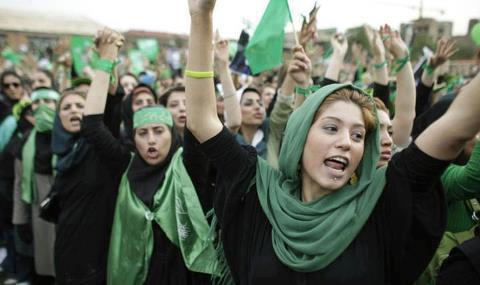
Nevertheless, the fundamental question remains: Has the flame of the Iranian revolution died? According to historical logic, a popular revolution never truly dies as long as its root causes persist. What drove these Iranian uprisings? Dictatorship veiled in religious sanctity, continuous economic deterioration undermining living standards in a country rich in human and financial resources, and a young generation yearning for freedom of expression, modern lifestyles, and creativity, unchained from 7th-century clerical dogmatism.
This explains why the Iranian ruling establishment permitted Hassan Rouhani—a figure outside the core conservative circle—to win the presidential elections in an attempt to pacify public anger. But can a reformist president alter Iranian reality? Looking back at Mohammad Khatami (1997–2005), who won 70% of the vote, he was ultimately powerless to effect structural change within the ruling apparatus. Khatami was caught between the hammer of conservative hardliners led by the Supreme Leader (Wali al-Faqih) and the anvil of crippling Western sanctions, which failed to offer meaningful concessions to an enlightened reformist. Rouhani faces the same systemic trap, inheriting reduced state subsidies on basic commodities from his predecessor.
Meanwhile, Western and regional media exploited the Syrian conflict, reframing it as a sectarian war between Sunnis and Shiites. State-sponsored religious figures amplified calls for holy war against the “Rafida” (Shiites) under the guise of supporting the Syrian people. The Iranian regime seized this opportunity, deploying Hezbollah to Syria in a highly publicized intervention. The Assad regime did not desperately need a few thousand Hezbollah fighters; the intervention served a narrative purpose rather than a purely military one. It allowed the totalitarian regime in Tehran to instill fear among its own citizens, framing any domestic opposition as complicity with an imaginary “Nasibi-Wahhabi-Salafi” enemy alongside the traditional threats of Zionism and imperialism.
This engineered sectarian fever threatens the entire region—Arabs, Iranians, Kurds, and Turks alike. Mobilizing rhetoric and fearmongering against engineered enemies serve only the interests of global powers and regional rulers.
Ultimately, the victory of the Syrian revolution in establishing a unified, civil, free, and democratic Syria would have rescued all nations in the region and freed Islam from the dark trajectories plotted in political corridors and royal palaces. In this context, Syrian opposition leaders demonstrated a grave failure—not only toward the Syrian people, but also toward the Iranian people, who could have been a powerful natural ally in altering the balance of power governing Syria and the wider region.
Alaa Aldin Alkhatib
(1) Rafida, a name used by extreme Sunnite to insult Shiite.
(2) Nasibi, a name used by extreme Shiite to insult Sunnite.


